

Haga clic aquí para ver el programa de concierto en español
Igor Stravinsky – Dumbarton Oaks
Darian Donovan Thomas – Wings
Missy Mazzoli – Violent, Violent Sea
Felix Mendelssohn – Symphony No. 4 in A major, “Italian”
I. Allegro vivace
II. Andante con moto
III. Con moto moderato
IV. Saltarello. Presto
———
Jump to
Musicians
Program Notes:
Stravinsky / Thomas / Mazzoli / Mendelssohn
Support One Found Sound
Onesies
LAND ACKNOWLEDGEMENT
One Found Sound respectfully acknowledges that the land on which we are gathered for this performance, and on which we have gathered for our rehearsals, is located on the unceded ancestral homeland of the Ramaytush Ohlone peoples—specifically the Yelamu—an independent tribe of the Ramaytush Ohlone that once inhabited what is now known as San Francisco County.
We share our acknowledgement with you to pay our respects to the ancestors, elders, descendants, and relatives of the Ramaytush Ohlone peoples; to affirm and promote consciousness of the cultural and sovereign rights of First Peoples; as a step in our continuing efforts to recognize the ongoing atrocities and brutalities of colonialism; and as a step in understanding our place in the process of decolonization and reconciliation as individuals, as artists, as an orchestra, and as a community.
We recognize that the Ramaytush Ohlone Peoples, as the original stewards of this land, understood the interconnectedness of all things and maintained harmony with nature for millennia, and we honor them for their enduring commitment to Mother Earth.
———
Visit the Association of Ramaytush Ohlone online at ramaytush.org
ONE FOUND SOUND
violin
Annamarie Arai-Lopez
Clare Armenante
Sarah Biagini
Ignacio Delfin
Kashi Elliott
Kymber Gillen
Pauline Kempf
Darren Sagawa
Corina Santos
Vita Yee
viola
Ezra Costanza
Jacob Hansen-Joseph
Paula Karolak
Sam Nelson
cello
Erik Andersen
Kendra Grittani
Byron Hogan
James Jaffe
bass
John DeMartino
Michael Minor
flute
James Blanchard
Sasha Launer
oboe
Adrienne Burg
Gabe Young
clarinet
Sarah Bonomo
Cory Tiffin
bassoon
Georgeanne Banker
Jamael Smith
horn
Patrick Jankowski
Kyle Ko
trumpet
Robert Giambruno
Ari Micich
trombone
Miriam Snyder
percussion
Jimmy Chan
Divesh Karamchandani
Eddie Virtgaym
Igor Stravinsky (1882 - 1971)
Dumbarton Oaks
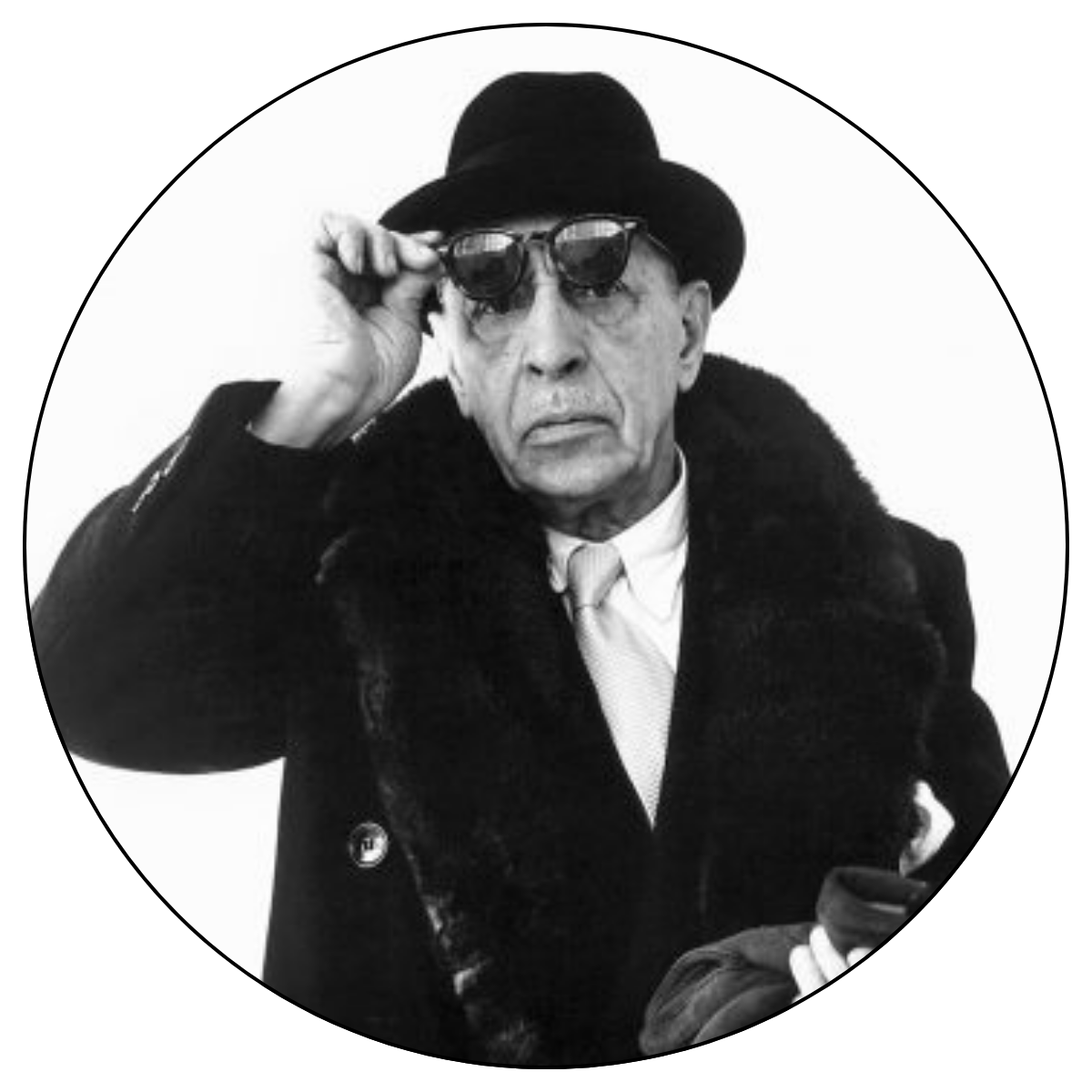
Igor Stravinsky
Around the time that he wrote this “Concerto” for chamber orchestra, Stravinsky had immersed himself in the music of J.S. Bach. He confessed that even some melodic material from the Baroque composer may have snuck in to this piece, but remained aloof as to whether it was a “conscious borrowing” or had simply made its way in via a kind of stylistic osmosis.
In any case, the Brandenburg Concertos bear the closest resemblance to Dumbarton Oaks in terms of structure, instrumentation, sound world, and overall “flair.” Both are named for places, and in both instances, these places haven’t much to do with the actual music that you hear, save for a compact orchestral size which could conservatively fit in a home’s music room. Bach wrote the Brandenburgs for the owner of a now-German territory bound by a castle. Stravinsky wrote Dumbarton Oaks for the diplomatic owner of a house and gardens in Washington, D.C. (the home famously housed a conference that laid the foundations for what would become the United Nations).
At a brisk pace clocking in under fifteen minutes, and in a fast - slow - faster form, this resembles the traditional Baroque and early Classical concerto in almost every way. Solo instruments are highlighted both individually and as the “concertino” group in dialogue with the orchestra at large, just as with Bach.
Although not dance music, the concerto is light, rhythmic, and characterful (a term meaning “having a distinctive character” for which this writer can find no suitable replacement). Even those pieces of Stravinsky which were not conceived as ballets still sometimes find their way into the dance world, and Jerome Robbins choreographed Dumbarton several years later. It’s the sort of music that you can tap your foot to but only for a time. Stravinsky loves to play with phrase lengths and craft complex rhythmic mosaics that hover between steadiness and unease. Likewise, he expands his view of tonality such that everything is roughly in E-flat, but with a distorted take on it. You may have a sense of what the next chord will be while listening, and you may get it right…in some ways and some of the time.
—Patrick Jankowski
Darian Donovan Thomas
Wings
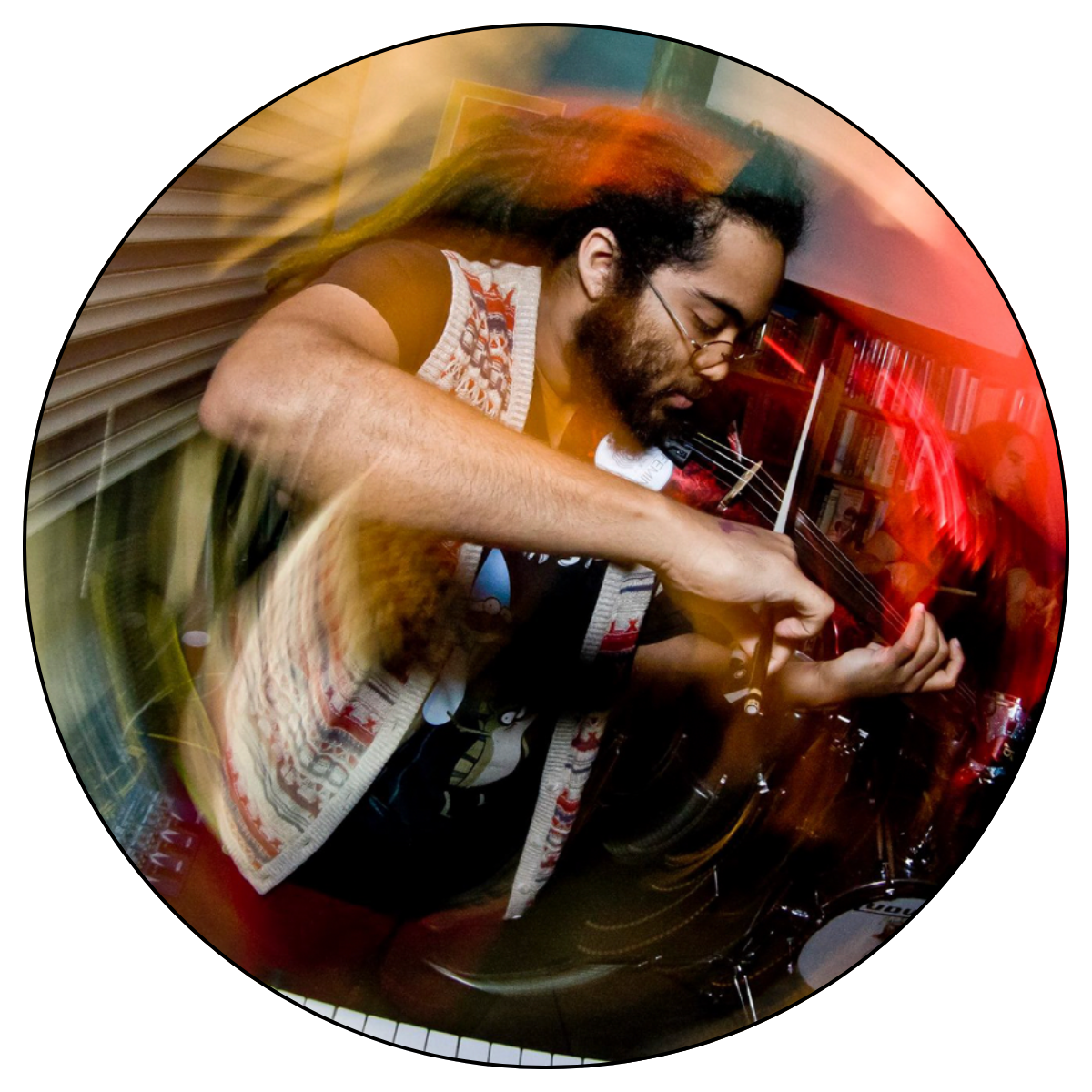
Darian Donovan Thomas
Photo by Oscar Moreno
”The sound of wings fluttering in chilled air.”
Production, engineering, and artwork are all the work of the composer.
Darian Donovan Thomas is a Brooklyn based composer, multi-instrumentalist, and interdisciplinary artist. He is interested in combining genres into a singular vocabulary that can express ideas about intersectionality (of medium and identity). Necessarily, he is interested in redacting all barriers to entry that have existed at the gates of any genre- this vocabulary of multiplicity will be intersectional, and therefore all-inclusive. He has received a Bachelors in Music Composition from The University of the Incarnate Word, and was a 2018 New Amsterdam Composer Lab Fellow, 2018 SoSI Composer Fellow, and 2019 Banglewood Composition Fellow. He is currently touring with Moses Sumney and Balùn. darianthomas.myportfolio.com
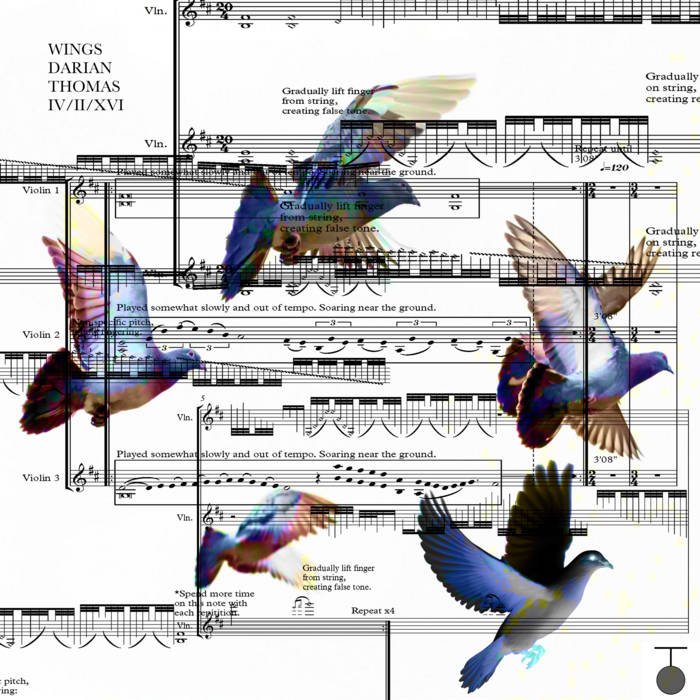
Artwork by Darian Donovan Thomas
Missy Mazzoli
Violent, Violent Sea
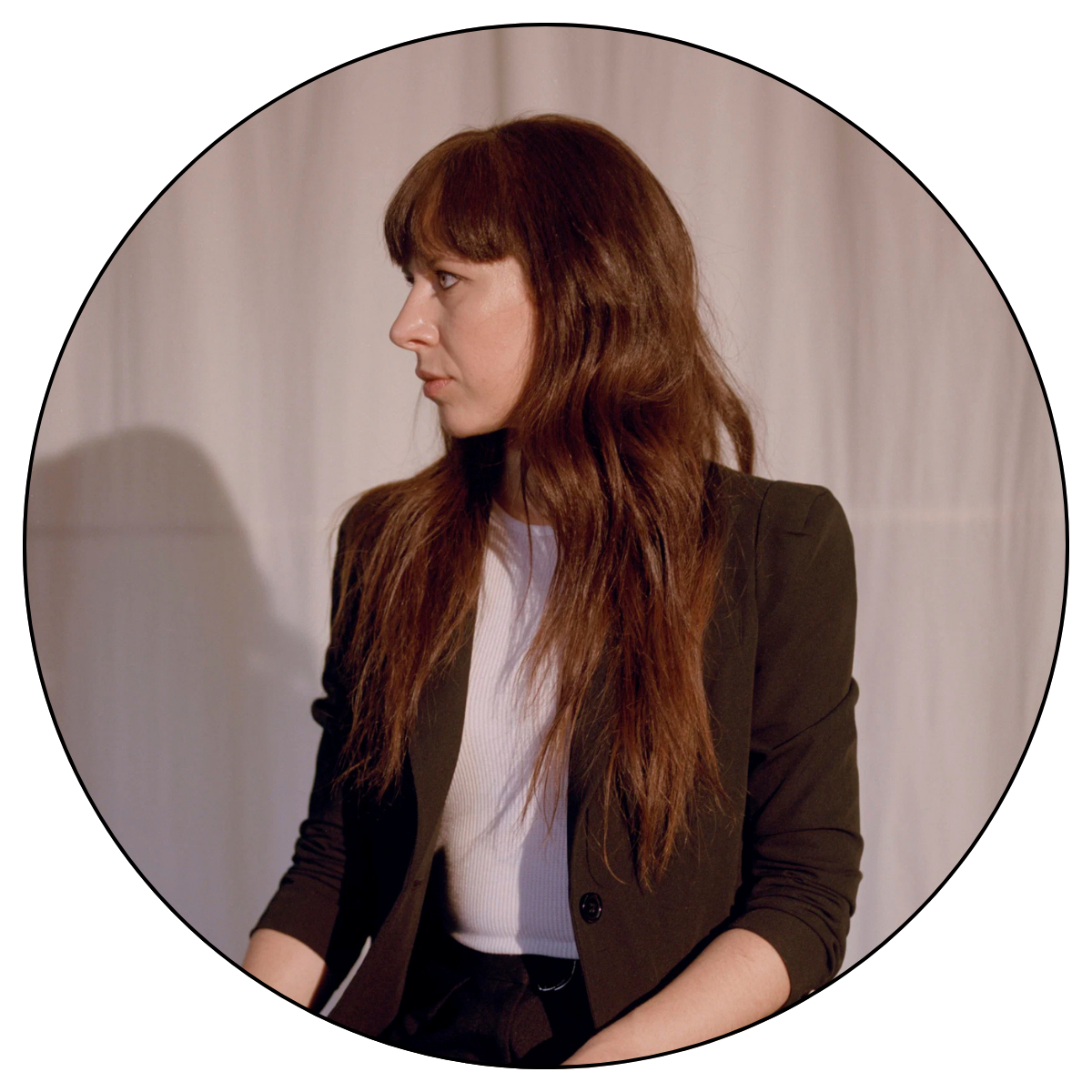
Missy Mazzoli
Photo by Caroline Tompkins
”This work began with more of an emotional impression than a precise musical idea. My early notes for the piece look something like this:
LOUD BUT SLOW. LIGHT BUT DARK. VIBRAPHONE. HOW TO DO THIS?
To my relief I eventually did figure out “how to do this.” The work evolved significantly from these early sketches but my idea of creating a loud, dense work with conflicting light and dark sides remained intact. The result is a ten-minute piece with a deceptively sparkling exterior and dark, slow-moving chords at its core. These chords grind against each other, dissolve into glissandos and crescendo into surprising dissonances under the glistening patina of vibraphone and marimba. This work is dedicated to Sheila Mazzoli, who loves the sea more than anyone.”
— Missy Mazzoli
Recently deemed “one of the more consistently inventive, surprising composers now working in New York” (NY Times), “Brooklyn’s post-millennial Mozart” (Time Out NY), and praised for her “apocalyptic imagination” (Alex Ross, The New Yorker), Missy Mazzoli has had her music performed by the Kronos Quartet, LA Opera, eighth blackbird, the BBC Symphony, the Minnesota Orchestra, Scottish Opera and many others. In 2018 she became, along with Jeanine Tesori, one of the first woman to receive a main stage commission from the Metropolitan Opera, and was nominated for a Grammy award in the category of “Best Classical Composition”. She is currently the Mead Composer-in-Residence at the Chicago Symphony Orchestra, and from 2012-2015 was Composer-in-Residence with Opera Philadelphia.
Her 2018 opera Proving Up, created with longtime collaborator librettist Royce Vavrek and based on a short story by Karen Russell, is a surreal commentary on the American dream. It was commissioned and premiered by Washington National Opera, Opera Omaha and Miller Theatre, and was deemed “harrowing… a true opera for its time” by the Washington Post. Her 2016 opera Breaking the Waves, commissioned by Opera Philadelphia and Beth Morrison Projects, was called “one of the best 21st-century American operas yet” by Opera News. Breaking the Waves received its European premiere at the 2019 Edinburgh Festival; future performances are planned at LA Opera, Houston Grand Opera, and the Adelaide Festival. Her next opera, The Listeners, will premiere in 2021 at the Norwegian National Opera and Opera Philadelphia.
In 2016, Missy and composer Ellen Reid founded Luna Lab, a mentorship program for young female composers created in partnership with the Kaufman Music Center. Her works are published by G. Schirmer. missymazzoli.com
Violent, Violent Sea was commissioned by the Barlow Endowment and the League of Composers Chamber Orchestra, and was premiered at Miller Theater in New York City in June 2011.
Felix Mendelssohn (1809 - 1847)
Symphony No. 4 in A Major, “Italian”
I. Allegro vivace
II. Andante con moto
III. Con moto moderato
IV. Saltarello. Presto
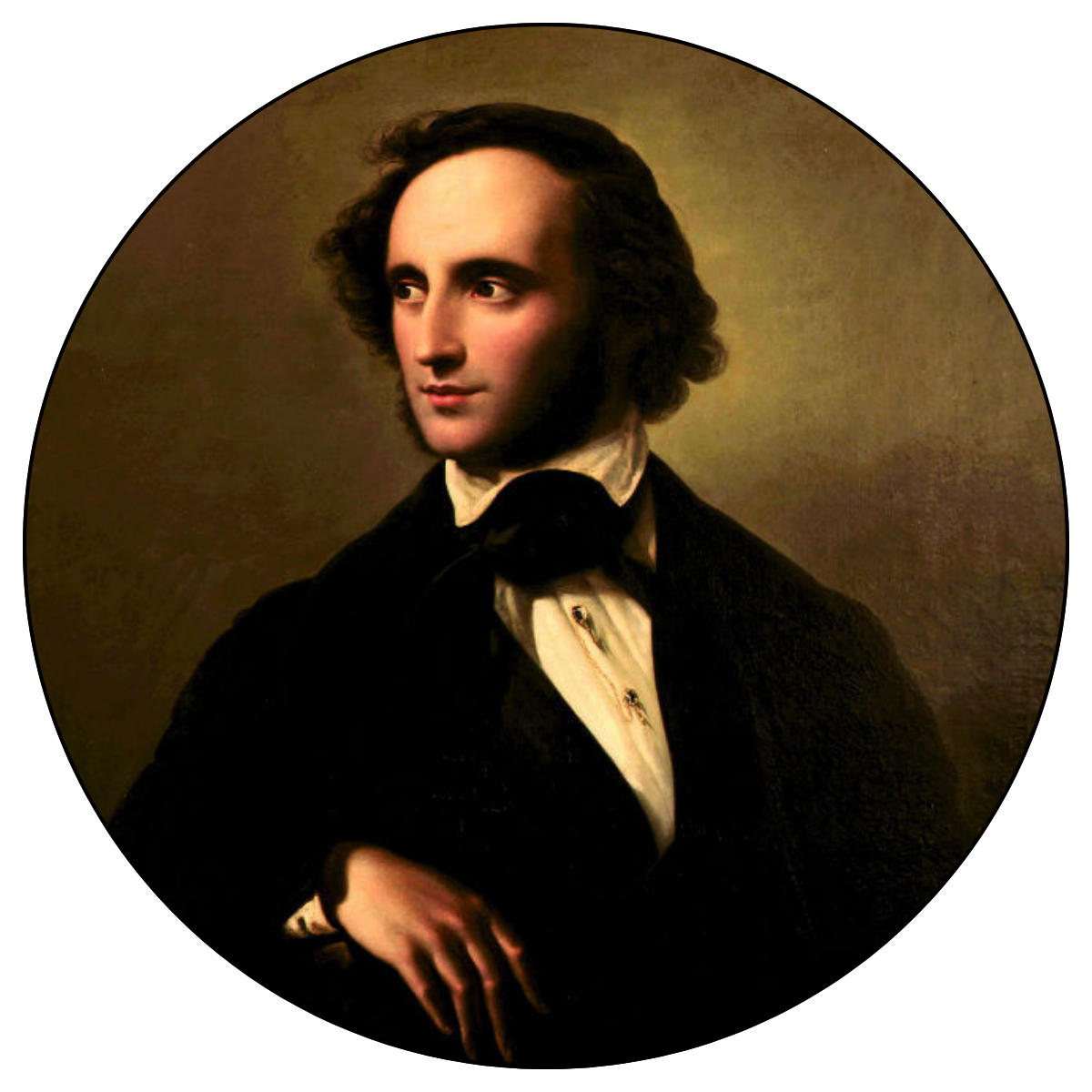
Felix Mendelssohn
Portrait by Wilhelm Hensel
Shortly after his twentieth birthday, Felix Mendelssohn left his native Germany for a Grand Tour across Europe, with the goal, in his words, to “refine and cultivate [my] own taste.” The Tour was a traditional coming-of-age trip for wealthier young men (as 18th-century historian Edward Gibbon said, “foreign travel completes the education of an English gentleman”), and Mendelssohn wasted no time completing his own education the same way.
Note what his education included to that point: Mendelssohn had already composed works such as his Octet, written at age 16, and the Overture to A Midsummer Night’s Dream, which now stands as the (literal) textbook definition of a concert overture. He studied geography and history at the University of Berlin, translated classical Latin texts, painted watercolors, and corresponded with Johann Wolfgang von Goethe. In March of 1829, Mendelssohn led a large-scale revival of a forgotten work, the St. Matthew Passion by J.S. Bach, which effectively launched Bach from obscurity to his perennial place in the pantheon of Western composers.
And with that, he set out. Following his tour of England and Scotland (which inspired his “Scottish” Symphony No. 3 and The Hebrides overture), Mendelssohn arrived in Italy in 1830, where he stayed for nearly a year. He wrote to his parents when he arrived:
“Italy at last! and what I have all my life considered as the greatest possible felicity, is now begun, and I am basking in it. The day has been so fruitful in enjoyment, that I must, now that it is evening, endeavor to collect my thoughts a little to write to you, my dear parents, and to thank you for having bestowed such happiness on me.”
Through his detailed letters and sketches, Mendelssohn cataloged all that he felt and saw and heard: from the Vatican’s billowing censers to smoldering Mt. Vesuvius, trips across verdant Tuscan plains and stormy southern seas, from dazzling parties to Holy Week processionals. And as any content creator might, he likewise recorded his impressions through sound:
“I have once more begun to compose with fresh vigor, and the Italian symphony makes rapid progress,” he wrote to his sister Fanny from Rome. “It will be the most cheerful (lustigste) piece I have yet composed, especially the last movement.”
The Italian Symphony starts with a breath of fresh air, as the Allegro vivace revels in the Mezzogiorno sun. The solemn processional of the second movement leads us to the rolling countryside, where breezy strings and pastoral horn calls give way to the finale’s exuberant leaps and bounds.
The Symphony closes with a Saltarello, a lively dance that takes its name from the Italian saltare, meaning “to jump.” Mendelssohn peppers the Saltarello with elements of the Tarantella, a southern Italian folk dance named in part for the tarantula wolf spider, whose bite was said to cause frenzied dancing. Legend has it that these dancing spells could be cured by calm sounds, whereas excited music only encouraged them. Having no interest in the former, Mendelssohn spins us around to the very end.
Mendelssohn completed his Symphony No. 4, “Italian,” in 1833 following a commission by the Philharmonic Society of London (the group had previously commissioned a little tune called Beethoven’s Ninth Symphony, of which they gave the London premiere just eight years earlier).
Yet in spite of the “Italian” Symphony’s success, Mendelssohn rather saw it as a work in progress: though he sketched numerous (and significant) revisions over the following decade, the Symphony was ultimately left unpublished upon his untimely death at age 38.
The version best known today is what Mendelssohn first penned at age 24: a gut impression, a bright memory filled with freshness and frolic, excitement and abandon.
From its first notes, the greatest possible felicity is now begun, and we are basking in it.
— Georgeanne Banker
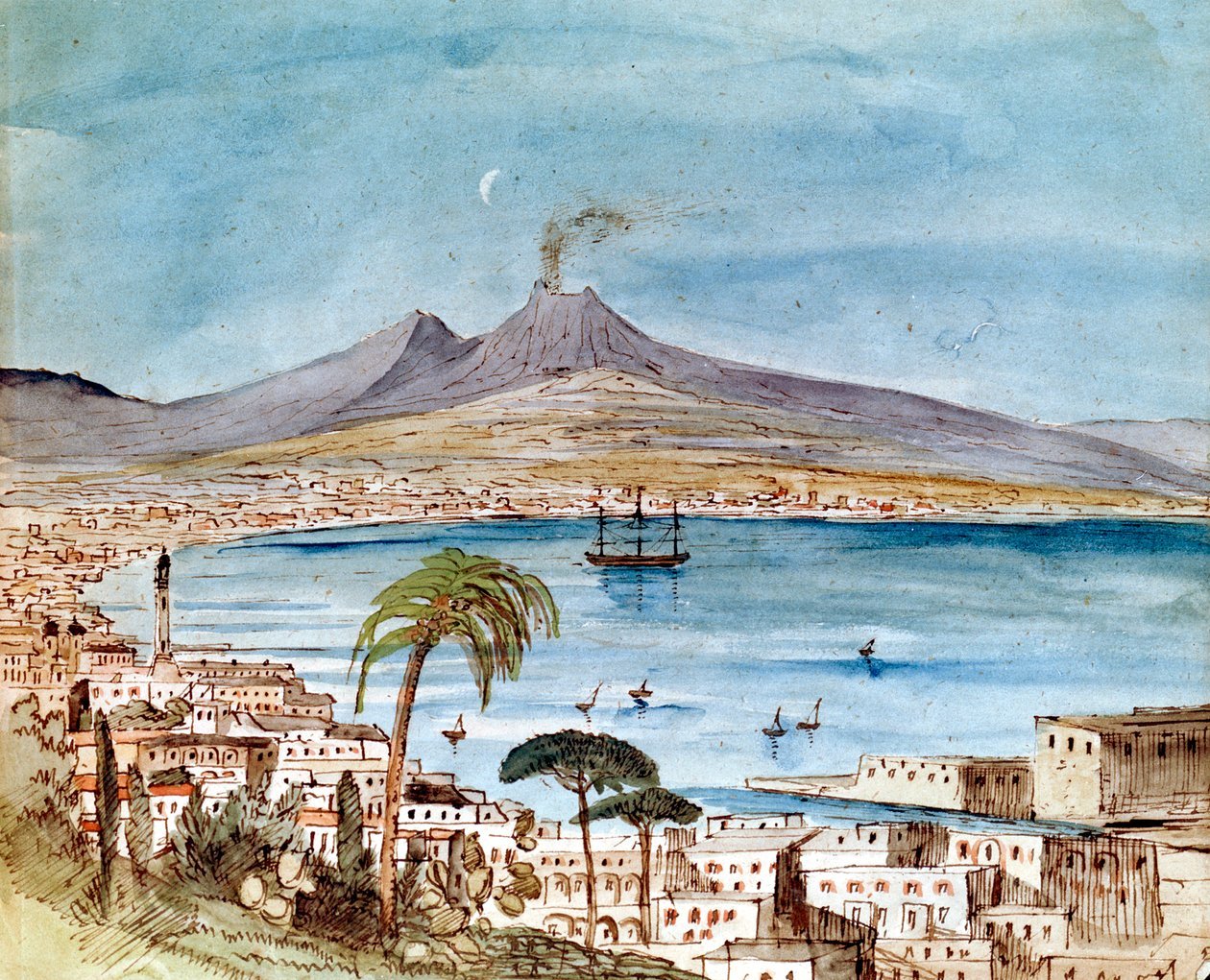
View of Mt. Vesuvius (1831)
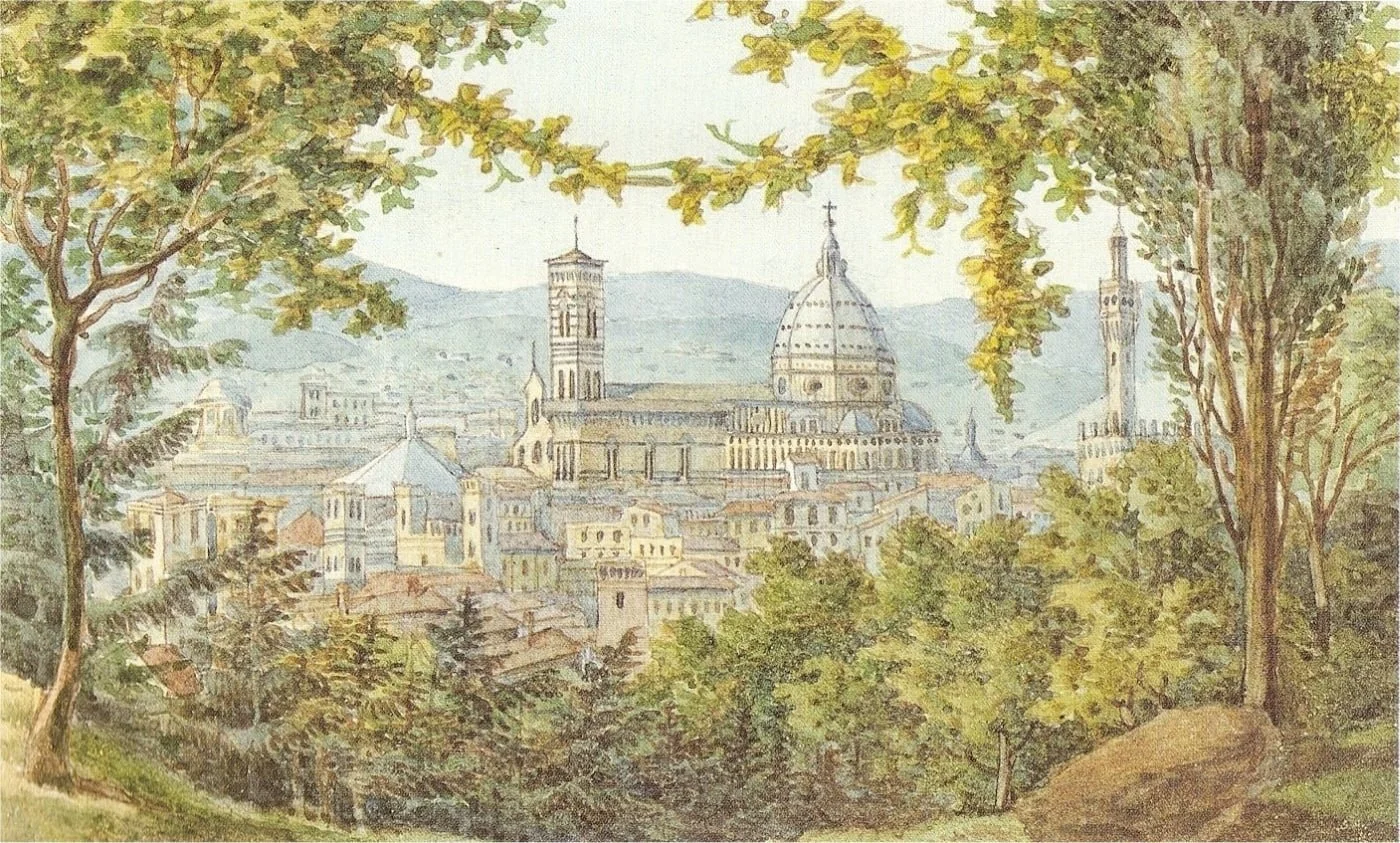
View of Florence (1830)
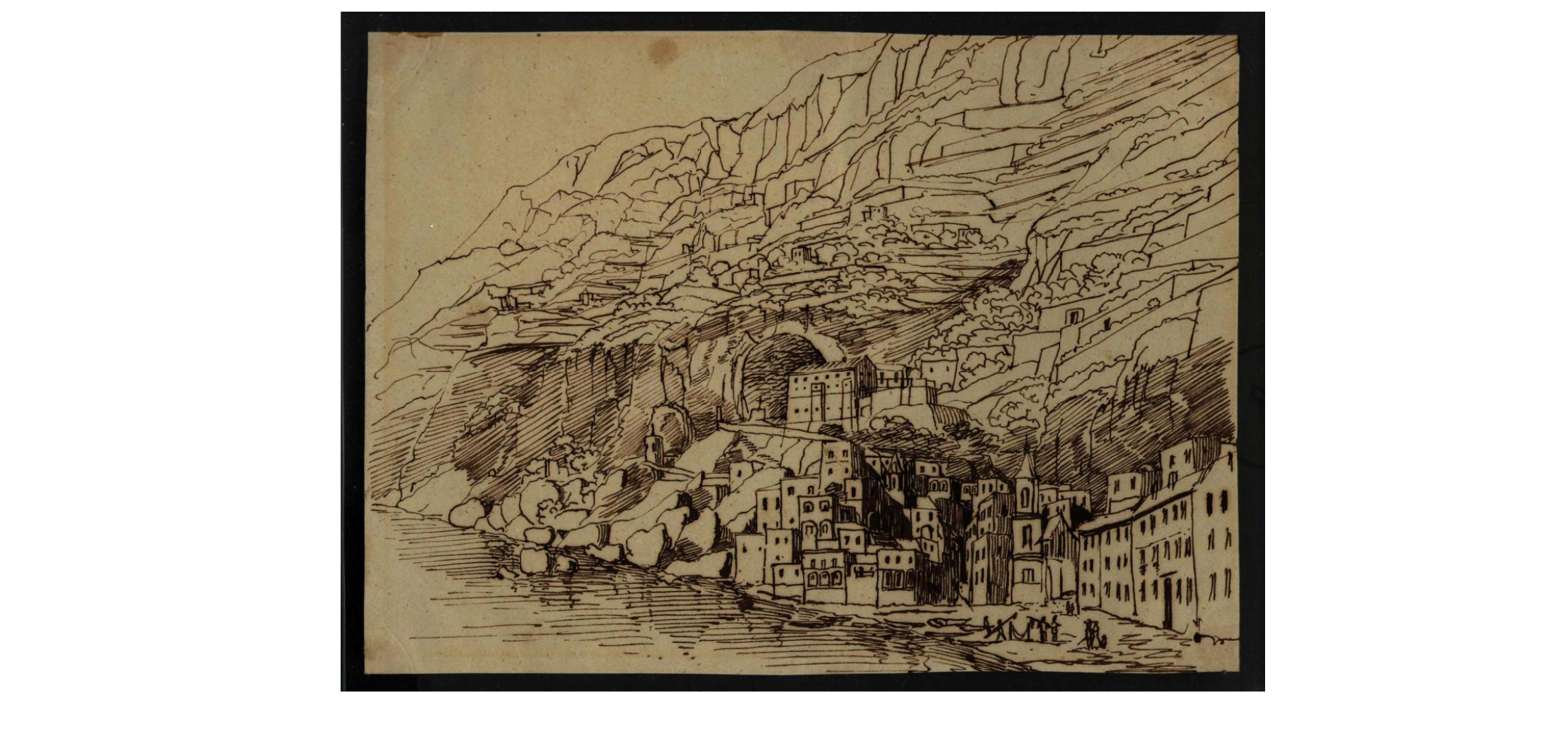
The Amalfi Coast in May (1831)

The Amalfi Coast (1836)

Thank you for contributing to our item drive in support of La Voz Latina. La Voz Latina has positive impact in the Tenderloin neighborhood by creating a welcoming space for our community. La Voz offers monthly and weekly programs to help meet the needs of our neighbors and to provide people in the Tenderloin and beyond with tools and resources that help them improve their lives and the lives of others. Learn more at lavozlatinasf.org.
Next up!
Music for the curious and capricious, featuring a work from our 2025 Emerging Composer Award winner.
Carlos Simon – Fate Now Conquers
Joseph Haydn – Symphony No. 59 In A Major, “Fire”
Aidan de Guzman - When Cherry Blossoms Burned (2025 Emerging Composer Award Winner)
Ludwig van Beethoven – Symphony No. 4 in B-flat major, Op. 60
From artist compensation to concert production costs, your support helps our orchestra thrive. All proceeds from tonight’s event will support our 2026/27 season, helping us bring classical music to wider audiences in our community through unique concert experiences.
Thank you for making your tax-deductible contribution at our performance tonight or by clicking the link below.
Thank you for your support
Become a Onesie! Chat with us tonight, send an email to lalita@onefoundsound,org, or visit us online to learn more about the perks of joining our exciting Onesie patron program.
Thank you to our Onesies!
Crystal
$10,000 annually or $2,500 quarterly
Anonymous
James F. Bonomo, Gabriella Bonomo, Adam Bonomo, Kitty
Ruby
$5,000 annually or $1,250 quarterly
Rick Launer and Amy Sadoff
Connie Zweigle
Emerald
$2,500 annually or $625 quarterly
Anonymous (3)
Jeff Padden
Mark Slee & Chloé Blain
Brad Taylor
Diamond
$1,000 annually or $250 quarterly
Anonymous
Gerard Buulong & Fred Silverman
Crane Data Centers
Beau Davenport
Linda Dembo and Stephen Smoliar
Erik Goldman
Dean Gooch
Brien Henderson
Zack Launer
Peter Nelson
Kiran & Leela Richards
Marco Rozzano
Andrew Watterson and Keith Kurson
Velvet
$500 annually or $125 quarterly
Anonymous (4)
Alessandra Aquilanti & Josh Walden
Elizabeth Arai
Bill & Shirley Banker
Ann & Scott Botel-Barnard
Frank Daffin & Amy Barrett-Daffin
Samantha Goldstein
Riccardo Guidi
Melissa G. Hernandez
Nicola Shangrow Reilly
Christopher Slee
Tom and Karen Tsueipauer
Chris Zweigle
Sparkle
$200 annually or $50 quarterly
Antoinette Barrett
Hilary Beech
Martin & Kathleen Cohn
Lisa Eltinge and Jonathan Burton
Sherri Cornett & Steve Kriner
E and J
Jon Gooblar
Phil & Valerie Heller
J.D. Hogan
Curt Holzinger
Steven Horwitz
Donna & Mike Kaplan
Cynthia Launer & Will Thomas
Carol Lewis
Helise Mack
Ken Marson
Sejal Patel
Kala Perkins
Utthara R.
Dr. Susan Raeburn
Lou Scott
Michel Taddei
Paul Van Cleave
Programa de concierto en español
Programa de concierto
Igor Stravinsky – Dumbarton Oaks
Darian Donovan Thomas – Wings
Missy Mazzoli – Violent, Violent Sea
Felix Mendelssohn –Sinfonía n.º 4 en La mayor, “Italiana”
I. Allegro vivace
II. Andante con moto
III. Con moto moderato
IV. Saltarello. Presto
———
Ir a la sección:
Músicos
Notas del programa:
Stravinsky / Thomas / Mazzoli / Mendelssohn
Apoyar One Found Sound
Onesies
reconocimiento del territorio
One Found Sound reconoce respetuosamente que la tierra en la que nos reunimos para esta presentación, y en la que nos hemos reunido para nuestros ensayos, se encuentra en el territorio ancestral no cedido de los pueblos Ramaytush Ohlone—específicamente de los Yelamu—una tribu independiente de los Ramaytush Ohlone que habitó lo que hoy se conoce como el condado de San Francisco.
Compartimos este reconocimiento con ustedes para honrar a los ancestros, mayores, descendientes y familiares de los pueblos Ramaytush Ohlone; para afirmar y promover la conciencia sobre los derechos culturales y de soberanía de los Primeros Pueblos; como un paso en nuestros esfuerzos continuos por reconocer las atrocidades y brutalidades persistentes del colonialismo; y como un paso hacia la comprensión de nuestro lugar en el proceso de descolonización y reconciliación como individuos, como artistas, como orquesta y como comunidad.
Reconocemos que los pueblos Ramaytush Ohlone, como los guardianes originarios de esta tierra, comprendían la interconexión de todas las cosas y mantuvieron la armonía con la naturaleza durante milenios, y los honramos por su compromiso perdurable con la Madre Tierra.
———
Visita la Asociación de los Ramaytush Ohlone en línea en ramaytush.org.
ONE FOUND SOUND
Violín
Arai-Lopez Annamarie
Clare Armenante
Sarah Biagini
Ignacio Delfin
Kashi Elliott
Kymber Gillen
Pauline Kempf
Darren Sagawa
Corina Santos
Vita Yee
Viola
Ezra Costanza
Jacob Hansen-Joseph
Paula Karolak
Sam Nelson
Violonchelo
Erik Andersen
Kendra Grittani
Byron Hogan
James Jaffe
Contrabajo
John DeMartino
Michael Minor
Flauta
James Blanchard
Sasha Launer
Oboe
Adrienne Burg
Gabe Young
Clarinete
Sarah Bonomo
Cory Tiffin
Fagot
Georgeanne Banker
Jamael Smith
Corno francés
Patrick Jankowski
Kyle Ko
Trompeta
Robert Giambruno
Ari Micich
Trombón
Miriam Snyder
Percusión
Jimmy Chan
Divesh Karamchandani
Eddie Virtgaym
Igor Stravinsky (1882 - 1971)
Dumbarton Oaks
Igor Stravinsky
Alrededor de la época en que escribió este “Concierto” para orquesta de cámara, Stravinsky se había sumergido en la música de J.S. Bach. Confesó que incluso algún material melódico del compositor barroco pudo haberse colado en esta obra, pero se mostró reservado respecto a si se trataba de un “préstamo consciente” o simplemente había llegado a través de una especie de osmosis estilística.
En cualquier caso, los Conciertos de Brandeburgo son los que más se asemejan a Dumbarton Oaks en términos de estructura, instrumentación, mundo sonoro y “estilo” general. Ambos llevan el nombre de lugares, y en ambos casos, estos lugares tienen poco que ver con la música que se escucha, salvo por un tamaño orquestal compacto que podría caber, con cierta modestia, en la sala de música de una casa. Bach escribió los Brandeburgo para el propietario de un territorio ahora alemán, limitado por un castillo. Stravinsky escribió Dumbarton Oaks para el dueño diplomático de una casa y jardines en Washington, D.C. (la residencia albergó, de manera famosa, una conferencia que sentó las bases de lo que sería la Organización de las Naciones Unidas).
Con un ritmo ágil de menos de quince minutos y en una forma rápido - lento - más rápido, se asemeja al concierto barroco y clásico temprano en casi todos los aspectos. Los instrumentos solistas se destacan tanto individualmente como en el grupo de “concertino”, en diálogo con la orquesta en general, tal como hacía Bach. Aunque no es música de danza, el concierto es ligero, rítmico y lleno de carácter (un término que significa “tener un carácter distintivo”, para el cual este escritor no encuentra un reemplazo adecuado). Incluso aquellas obras de Stravinsky que no fueron concebidas como ballets a veces encuentran su camino hacia el mundo de la danza, y Jerome Robbins coreografió Dumbarton varios años después. Es el tipo de música al que se puede acompañar con un golpecito de pie, pero solo por un tiempo. Stravinsky ama jugar con la longitud de las frases y crear complejos mosaicos rítmicos que oscilan entre la estabilidad y la inquietud. Asimismo, amplía su visión de la tonalidad de manera que todo esté aproximadamente en Mi bemol, pero con un enfoque distorsionado. Mientras escuchas, puedes tener una idea del siguiente acorde, y puede que lo aciertes… en ciertos sentidos y parte del tiempo.
— Patrick Jankoswki
Volver arriba
Darian Donovan Thomas
Wings
Darian Donovan Thomas
Foto de Oscar Moreno
“El sonido de alas aleteando en el aire frío.”
La producción, ingeniería y el arte son obra del propio compositor.
Darian Donovan Thomas es un compositor, multiinstrumentista y artista interdisciplinario radicado en Brooklyn. Su interés se centra en combinar géneros en un vocabulario singular capaz de expresar ideas sobre la interseccionalidad (tanto de medio como de identidad). Por necesidad, busca eliminar todas las barreras de acceso que han existido históricamente en cualquier género: este vocabulario de multiplicidad será interseccional y, por ende, inclusivo para todos. Ha obtenido una Licenciatura en Composición Musical en The University of the Incarnate Word, y fue fellow del New Amsterdam Composer Lab en 2018, fellow del SoSI Composer en 2018, y fellow de Banglewood Composition en 2019. Actualmente realiza giras con Moses Sumney y Balùn. darianthomas.myportfolio.com
Obra de Darian Donovan Thomas
Missy Mazzoli
Violent, Violent Sea
Missy Mazzoli
Foto de Caroline Tompkins
“Esta obra comenzó más como una impresión emocional que como una idea musical precisa. Mis primeras notas para la pieza se veían más o menos así:
FUERTE PERO LENTO. LUMINOSO PERO OSCURO. VIBRÁFONO. ¿CÓMO HACER ESTO?
Para mi alivio, finalmente logré descifrar ‘cómo hacer esto’. La obra evolucionó significativamente a partir de estos bocetos iniciales, pero mi idea de crear una obra fuerte y densa, con lados claros y oscuros en conflicto, se mantuvo intacta. El resultado es una pieza de diez minutos con un exterior engañosamente brillante y acordes oscuros y de movimiento lento en su núcleo. Estos acordes se rozan entre sí, se disuelven en glissandos y crecen en sorprendentes disonancias bajo la pátina reluciente del vibráfono y la marimba. Esta obra está dedicada a Sheila Mazzoli, quien ama el mar más que nadie”.
— Missy Mazzoli
Recientemente considerada “una de las compositoras más consistentemente inventivas y sorprendentes que trabajan hoy en Nueva York” (New York Times), “la Mozart posmilenial de Brooklyn” (Time Out NY), y elogiada por su “imaginación apocalíptica” (Alex Ross, The New Yorker), Missy Mazzoli ha tenido su música interpretada por el Kronos Quartet, LA Opera, eighth blackbird, la BBC Symphony, la Minnesota Orchestra, Scottish Opera y muchos otros. En 2018 se convirtió, junto con Jeanine Tesori, en una de las primeras mujeres en recibir un encargo para el escenario principal del Metropolitan Opera, y fue nominada a un premio Grammy en la categoría de “Mejor Composición Clásica”. Actualmente es compositora residente Mead en la Chicago Symphony Orchestra, y de 2012 a 2015 fue compositora residente de Opera Philadelphia.
Su ópera de 2018 Proving Up, creada con su colaborador de larga data, el libretista Royce Vavrek, y basada en un relato corto de Karen Russell, es un comentario surrealista sobre el sueño americano. Fue encargada y estrenada por Washington National Opera, Opera Omaha y Miller Theatre, y fue calificada como “desgarradora… una verdadera ópera para su tiempo” por el Washington Post. Su ópera de 2016 Breaking the Waves, encargada por Opera Philadelphia y Beth Morrison Projects, fue llamada “una de las mejores óperas estadounidenses del siglo XXI hasta ahora” por Opera News. Breaking the Waves recibió su estreno europeo en el Festival de Edimburgo de 2019; se planean futuras funciones en LA Opera, Houston Grand Opera y el Festival de Adelaida. Su próxima ópera, The Listeners, se estrenará en 2021 en la Ópera Nacional de Noruega y en Opera Philadelphia.
En 2016, Missy y la compositora Ellen Reid fundaron Luna Lab, un programa de mentoría para jóvenes compositoras creado en colaboración con el Kaufman Music Center. Sus obras son publicadas por G. Schirmer. missymazzoli.com
Violent, Violent Sea fue encargada por la Barlow Endowment y la League of Composers Chamber Orchestra, y se estrenó en el Miller Theater de la ciudad de Nueva York en junio de 2011.
Felix Mendelssohn (1809 - 1847)
Sinfonía n.º 4 en La mayor, “Italiana”
I. Allegro vivace
II. Andante con moto
III. Con moto moderato
IV. Saltarello. Presto
Felix Mendelssohn
Retrato de Wilhelm Hensel
Poco después de su vigésimo cumpleaños, Felix Mendelssohn dejó su Alemania natal para emprender un Grand Tour por Europa, con el objetivo, en sus propias palabras, de “refinar y cultivar [mi] propio gusto”. El Tour era un viaje tradicional de iniciación a la adultez para los jóvenes de familias acomodadas (como dijo el historiador del siglo XVIII Edward Gibbon, “el viaje al extranjero completa la educación de un caballero inglés”), y Mendelssohn no perdió tiempo en completar su propia educación del mismo modo.
Obsérvese qué incluía su formación hasta ese momento: Mendelssohn ya había compuesto obras como su Octeto, escrito a los 16 años, y la Obertura de El sueño de una noche de verano, que hoy se considera la definición (literal) de libro de texto de una obertura de concierto. Estudió geografía e historia en la Universidad de Berlín, tradujo textos clásicos en latín, pintó acuarelas y mantuvo correspondencia con Johann Wolfgang von Goethe. En marzo de 1829, Mendelssohn dirigió una recuperación a gran escala de una obra olvidada, la Pasión según San Mateo de J. S. Bach, lo que efectivamente sacó a Bach de la oscuridad y lo lanzó a su lugar actual en el panteón de los compositores occidentales.
Y con todo eso, partió. Tras su gira por Inglaterra y Escocia (que inspiró su Sinfonía n.º 3 “Escocesa” y la obertura Las Hébridas), Mendelssohn llegó a Italia en 1830, donde permaneció casi un año. Escribió a sus padres al llegar:
«¡Italia por fin! y lo que durante toda mi vida he considerado como la mayor felicidad posible ha comenzado ahora, y estoy bañándome en ella.
El día ha sido tan rico en disfrute que, ahora que es de noche, debo intentar recoger un poco mis pensamientos para escribiros, queridos padres míos, y daros las gracias por haberme concedido tanta felicidad».
A través de sus detalladas cartas y bocetos, Mendelssohn catalogó todo lo que sintió, vio y oyó: desde los incensarios ondulantes del Vaticano hasta el humeante monte Vesubio; viajes por las verdes llanuras toscanas y los mares tempestuosos del sur; desde fiestas deslumbrantes hasta procesiones de Semana Santa. Y, como haría cualquier creador de contenido, también registró sus impresiones a través del sonido:
«He vuelto a empezar a componer con nuevo vigor, y la sinfonía italiana avanza rápidamente», escribió a su hermana Fanny desde Roma. «Será la obra más alegre (lustigste) que haya compuesto hasta ahora, especialmente el último movimiento».
La Sinfonía Italiana comienza como una bocanada de aire fresco, mientras el Allegro vivace se deleita en el sol del Mezzogiorno. La solemne procesión del segundo movimiento nos conduce al paisaje ondulado del campo, donde las cuerdas ligeras y las llamadas pastorales de las trompas dan paso a los saltos y carreras exuberantes del final.
La sinfonía concluye con un Saltarello, una danza animada que toma su nombre del italiano saltare, que significa “saltar”. Mendelssohn adereza el Saltarello con elementos de la Tarantella, una danza folclórica del sur de Italia cuyo nombre proviene en parte de la tarántula, una araña lobo cuya mordedura se decía que provocaba un baile frenético. Cuenta la leyenda que estos hechizos de baile podían curarse con sonidos tranquilos, mientras que la música excitada solo los fomentaba. Sin ningún interés en lo primero, Mendelssohn nos hace girar hasta el final.
Mendelssohn completó su Sinfonía n.º 4, “Italiana”, en 1833, tras un encargo de la Philharmonic Society de Londres (el grupo había encargado anteriormente una pequeña melodía llamada la Novena Sinfonía de Beethoven, de la cual ofrecieron el estreno londinense apenas ocho años antes).
Sin embargo, a pesar del éxito de la Sinfonía “Italiana”, Mendelssohn la consideró más bien una obra en proceso: aunque esbozó numerosas (y significativas) revisiones durante la década siguiente, la sinfonía quedó finalmente inédita tras su prematura muerte a los 38 años.
La versión más conocida hoy es la que Mendelssohn escribió por primera vez a los 24 años: una impresión visceral, un recuerdo luminoso lleno de frescura y alegría, emoción y abandono. Desde sus primeras notas, la mayor felicidad posible ha comenzado ahora, y estoy bañándome en ella.
— Georgeanne Banker
Vista del Monte Vesubio (1831)
Vista de Florencia (1830)
La Costa Amalfitana en mayo (1831)
La Costa Amalfitana (1836)
Gracias por contribuir a nuestra colecta de artículos en beneficio de La Voz Latina. El objetivo de La Voz es tener un impacto positivo en el vecindario de Tenderloin creando un espacio acogedor para nuestra comunidad. La Voz ofrece programas mensuales y semanales para ayudar a satisfacer las necesidades de nuestros vecinos y brindar a las personas en Tenderloin y más allá herramientas y recursos que les ayuden a mejorar su vida y la de los demás. Conoce más en lavozlatinasf.org.
¡A continuación!
Música para los curiosos y caprichosos, con una obra de nuestro ganador del Emerging Composer Award 2025.
Carlos Simon – Fate Now Conquers
Joseph Haydn – Sinfonía n.º 59 en La mayor, “Fuego”
Aidan de Guzman – When Cherry Blossoms Burned (Ganador del Emerging Composer Award 2025)
Ludwig van Beethoven – Sinfonía n.º 4 en Si bemol mayor, Op. 60
Gracias por su apoyo
Desde la compensación de los artistas hasta los costos de producción de los conciertos, tu apoyo ayuda a que nuestra orquesta prospere. Todos los ingresos del evento de esta noche apoyarán nuestra temporada 2026/27, ayudándonos a llevar la música clásica a públicos más amplios de nuestra comunidad a través de experiencias de concierto únicas.
Gracias por realizar tu contribución deducible de impuestos en nuestra función de esta noche o haciendo clic en el enlace a continuación.
¡Conviértete en un Onesie! Chatea con nosotros esta noche, envía un correo electrónico a lalita@onefoundsound.org o visítanos en línea para conocer más sobre los beneficios de unirte a nuestro emocionante programa de patrocinio Onesie.
¡Gracias a nuestros Onesies!
Crystal
$10,000+ al año o $2,500+ por trimestre
Anonymous
James F. Bonomo, Gabriella Bonomo, Adam Bonomo, Kitty
Ruby
$5,000+ al año o $1,250+ por trimestre
Rick Launer and Amy Sadoff
Connie Zweigle
Emerald
$2,500+ al año o $625+ por trimestre
Anonymous (3)
Jeff Padden
Mark Slee & Chloé Blain
Brad Taylor
Diamond
$1,000+ al año o $250+ por trimestre
Anonymous
Gerard Buulong & Fred Silverman
Crane Data Centers
Beau Davenport
Linda Dembo and Stephen Smoliar
Erik Goldman
Dean Gooch
Brien Henderson
Zack Launer
Peter Nelson
Kiran & Leela Richards
Marco Rozzano
Andrew Watterson and Keith Kurson
Velvet
$500+ al año o $125+ por trimestre
Anonymous (4)
Alessandra Aquilanti & Josh Walden
Elizabeth Arai
Bill & Shirley Banker
Ann & Scott Botel-Barnard
Frank Daffin & Amy Barrett-Daffin
Samantha Goldstein
Riccardo Guidi
Melissa G. Hernandez
Nicola Shangrow Reilly
Christopher Slee
Tom and Karen Tsueipauer
Chris Zweigle
Sparkle
$200+ al año o $50+ por trimestre
Antoinette Barrett
Hilary Beech
Martin & Kathleen Cohn
Lisa Eltinge and Jonathan Burton
Sherri Cornett & Steve Kriner
E and J
Jon Gooblar
Phil & Valerie Heller
J.D. Hogan
Curt Holzinger
Steven Horwitz
Donna & Mike Kaplan
Cynthia Launer & Will Thomas
Carol Lewis
Helise Mack
Ken Marson
Sejal Patel
Kala Perkins
Utthara R.
Dr. Susan Raeburn
Lou Scott
Michel Taddei
Paul Van Cleave